Why It Is Needed to Integrate an Emulsifier in Food for Optimum Preference and High Quality
Emulsifiers play a critical role in food production by making certain the stable mixing of immiscible fluids, such as oil and water. They minimize interfacial tension, which prevents the splitting up of components and contributes to a consistent appearance. This not just enhances mouthfeel but likewise influences taste understanding. Understanding the need of emulsifiers discloses deeper insights right into their feature and relevance in cooking applications. What implications does this have for food technology and customer preferences?
Understanding Emulsifiers: The Essentials
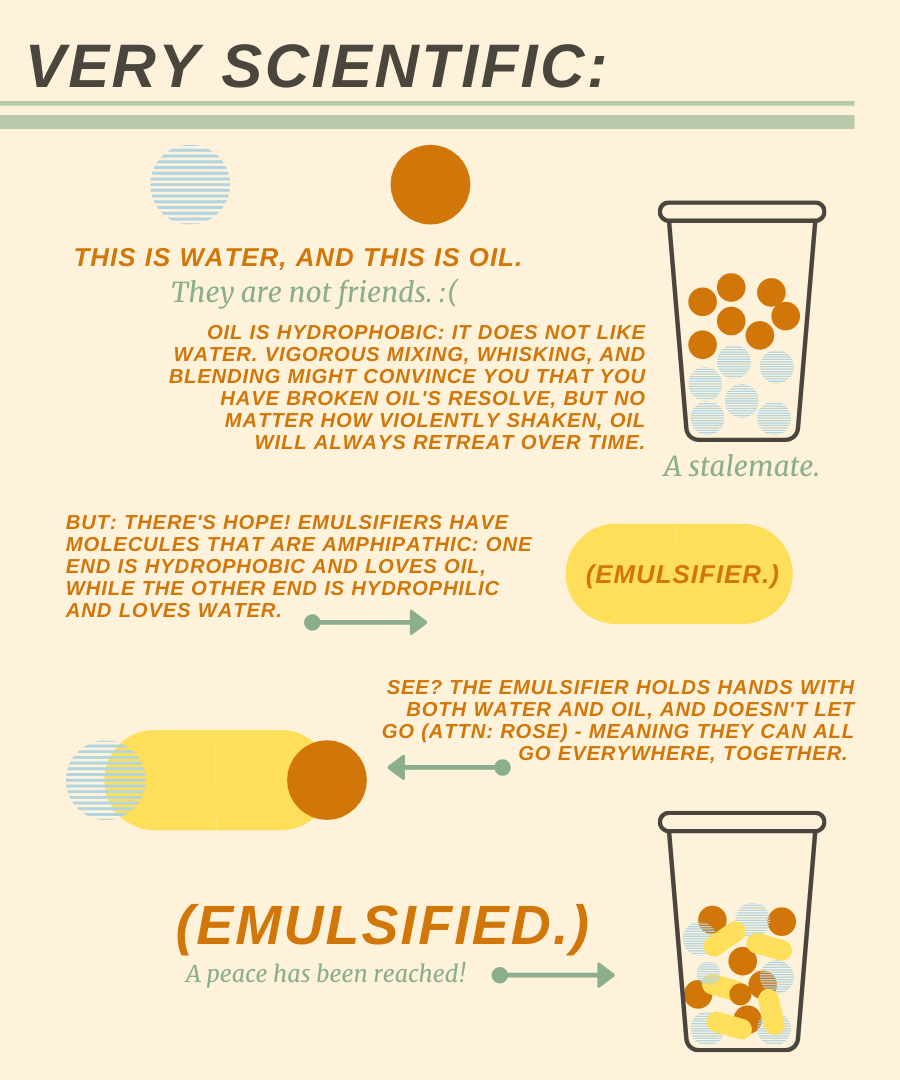
Emulsifiers play an essential duty in food scientific research, acting as agents that facilitate the mixing of 2 immiscible fluids, such as oil and water. These substances have both hydrophilic (water-attracting) and hydrophobic (water-repelling) homes, which enable them to support emulsions. Usual emulsifiers consist of lecithin, located in egg yolks and soybeans, and mono- and diglycerides, stemmed from fats.
The Science Behind Emulsification
When two immiscible liquids are integrated, the procedure of emulsification comes to be essential for achieving a secure mix. Emulsification includes distributing one fluid within another, commonly oil in water or the other way around. This procedure occurs via mechanical anxiety, which damages the bigger droplets into smaller ones, thus increasing the area. Without the existence of emulsifiers, these droplets would coalesce, leading to splitting up.
Emulsifiers are particles with hydrophilic (water-attracting) and hydrophobic (water-repelling) residential or commercial properties. Their distinct framework permits them to reduce the interfacial stress in between the two immiscible fluids, maintaining the emulsion. This stablizing stops separation and boosts the harmony of structure and taste. The communications at the molecular level are necessary for keeping the stability of the emulsion, ensuring that foodstuff keep their wanted uniformity and preference. Recognizing this scientific research is significant for food scientists and producers in creating high-grade food.
Kinds of Emulsifiers Made Use Of in Food
The kinds of emulsifiers used in food can be extensively categorized into synthetic and all-natural varieties. Usual food emulsifiers, such as lecithin and mono- and diglycerides, play a crucial role in boosting food stability and texture. Recognizing these distinctions is important for valuing exactly how emulsifiers add to the general top quality of foodstuff.
Natural vs. Artificial Emulsifiers
While both synthetic and natural emulsifiers serve the crucial role of maintaining combinations in food, their origins and qualities vary substantially. Natural emulsifiers, stemmed from plant or pet resources, include lecithin, casein, and particular gum tissues. They are usually viewed as healthier options, interesting customers seeking clean-label products. On the other hand, artificial emulsifiers, such as mono- and diglycerides, are chemically crafted and might use enhanced security and functionality in a larger array of applications. These synthetic choices can be more economical and offer constant high quality. Nevertheless, they may evoke skepticism amongst health-conscious consumers. Inevitably, the choice between all-natural and synthetic emulsifiers depends on the desired high qualities of the foodstuff, consisting of texture, taste, and shelf-life security.
Common Food Emulsifiers
Emulsifiers play an important duty in the food market, making certain the stability and structure of various items. Common food emulsifiers include lecithin, mono- and diglycerides, and polysorbates. Emulsifier In Food. Lecithin, acquired from sources like soybeans and egg yolks, is extensively used in baked products and delicious chocolates. Mono- and diglycerides, usually obtained from veggie oils, boost the creaminess of margarine and gelato. Polysorbates, synthetic emulsifiers, are regularly discovered in salad dressings and sauces, advertising a smooth consistency. Various other emulsifiers such as xanthan periodontal and guar periodontal, both natural thickeners, additionally add to the desired appearance in various food products. Each emulsifier kind serves details purposes, adding to the general high quality and allure of food things

Role in Food Security
Food stability is considerably influenced by the kinds of emulsifiers made use of, which assist prevent the splitting up of ingredients in numerous solutions. Emulsifiers such as lecithin, mono- and diglycerides, and polysorbates play vital functions in preserving the uniformity of items like dressings, sauces, and ice creams. Lecithin, stemmed from soy or egg yolk, is especially effective due to its natural buildings, while mono- and diglycerides enhance appearance and service life. Polysorbates, on the other hand, improve the security of oil-in-water solutions, making them optimal for baked products. The choice of emulsifier depends upon the details food application and desired qualities, making sure that items remain stable, attractive, and of high top quality throughout their intended service life.
Exactly How Emulsifiers Improve Texture and Mouthfeel
Enhancing the sensory experience of food, emulsifiers play an essential function in enhancing texture and mouthfeel. These materials assist in the uniform distribution of components, enabling a smoother and creamier consistency in products such as dressings, sauces, and gelato. By supporting combinations of oil and water, emulsifiers avoid separation, resulting in a cohesive texture that boosts the overall consuming view experience.
In addition, emulsifiers can modify the thickness of food, adding to a preferable density or creaminess. This modification of structure can affect exactly how food feels in the mouth, impacting fulfillment and satisfaction. Additionally, by producing a steady solution, emulsifiers help keep the integrity of the product, making certain that the intended mouthfeel is continually delivered in time. Generally, the application of emulsifiers is vital for accomplishing the best structure and mouthfeel, eventually boosting the quality of food products.
The Duty of Emulsifiers in Flavor Enhancement
Taste enhancement in cooking applications frequently pivots on the efficient usage of emulsifiers. These compounds facilitate the blending of water and oil, permitting the even distribution of taste compounds within food. By producing stable emulsions, emulsifiers aid to envelop and release unpredictable tastes, boosting the general sensory experience.
Additionally, emulsifiers can enhance the perception of preference by influencing the mouthfeel and appearance of meals. A smoother, extra natural product can bring about an enhanced understanding of tastes, making them more noticable and enjoyable. Emulsifiers can secure sensitive tastes from deterioration, making sure that they remain undamaged throughout handling and storage space.
Emulsifiers in Popular Food Products
How do emulsifiers contribute to the structure and security of preferred foodstuff? Emulsifiers play a vital function in different commonly taken in products. In salad dressings, they guarantee a smooth mix of oil and vinegar, preventing splitting up and improving mouthfeel. In gelato, emulsifiers develop a creamy appearance by supporting air bubbles, resulting in a abundant and indulgent product. Baked products, such as bread and cakes, take advantage of emulsifiers by enhancing quantity and crumb framework, resulting in a lighter and extra attractive structure. Furthermore, mayo depends on emulsifiers to keep its thick consistency and stop oil splitting up. Margarine and spreads additionally make use of emulsifiers to attain a spreadable appearance while preserving security. These instances illustrate the significant impact of emulsifiers on the high quality and satisfaction of daily food, highlighting their value in contemporary food solution.
The Future of Emulsifiers in Food Technology
The future of emulsifiers in food innovation is marked by considerable developments in innovation, paving the means for new formulas. In addition, the need for much healthier emulsifier alternatives is climbing, motivating researchers to discover plant-based and natural alternatives. Lasting sourcing methods are likewise coming to be crucial, as customers significantly prioritize ecological duty in their food choices.
Advancements in Emulsifier Innovation
As researchers continue to check out the molecular details of emulsifiers, substantial developments are arising that pledge to transform food innovation. Recent growths focus on creating a lot more flexible and reliable emulsifiers that improve structure, security, and taste in different foodstuff. Innovations in biopolymer-based emulsifiers are acquiring grip, offering enhanced sustainability and efficiency over conventional options. In addition, advancements in nanotechnology are making it possible for the design of emulsifiers at the molecular level, which can result in finer solutions and boosted sensory experiences. These technical developments are not only improving item quality yet his response also increasing the series of applications for emulsifiers in the food industry. As these developments unfold, they are anticipated to redefine culinary possibilities and consumer choices in the future.
Healthier Emulsifier Alternatives
While standard emulsifiers have played a vital function in food production, there is an expanding need for healthier choices that align with customer choices for all-natural components and tidy labels. Developments in plant-based emulsifiers, such as those originated from flaxseed, sunflower, and soy, have gotten appeal because of their viewed health and wellness advantages. These options commonly contain less ingredients and offer performance comparable to synthetic emulsifiers. Furthermore, active ingredients like aquafaba, the fluid from prepared chickpeas, have become flexible emulsifying representatives, interesting vegan and health-conscious customers. Emulsifier In Food. The shift in the direction of these healthier emulsifiers not just enhances the appeal of food products but additionally supports the trend of openness in component sourcing, ultimately cultivating customer depend on and complete satisfaction
Lasting Sourcing Practices
Lasting sourcing practices are becoming significantly crucial in the advancement of emulsifiers, reflecting a broader dedication to environmental obligation within the food market. Producers are currently prioritizing making use of renewable energies, such as plant-based ingredients, which decreases the carbon footprint related to standard emulsifiers. This shift not only supports biodiversity however likewise advertises ethical farming methods that profit regional neighborhoods. In addition, innovations in innovation make it possible for the removal and handling of emulsifiers with decreased ecological impact. By adopting lasting sourcing, companies boost their brand image while meeting customer need for transparency and eco-friendliness. As the food sector remains to advance, the combination of lasting emulsifiers will play a crucial function in forming future innovations, ensuring an equilibrium in between quality and ecological stewardship.
Often Asked Inquiries
Are Emulsifiers Safe for People With Food Allergies?

Can Emulsifiers Impact the Nutritional Worth of Food?
Emulsifiers can influence the nutritional value of food by improving nutrition absorption or potentially changing the bioavailability of specific compounds. Nevertheless, their effects vary extensively depending on the kind of emulsifier and the general food formula.
Just How Do Emulsifiers Impact Life Span of Products?
Emulsifiers enhance the life span of products by maintaining mixtures, avoiding splitting up, and decreasing wasting. This stability assists preserve appearance and taste with time, eventually making sure food stays risk-free and attractive for longer durations.
What Prevail All-natural Emulsifiers Located in Home Kitchens?
Common all-natural emulsifiers discovered in home kitchen areas consist of egg yolks, soy, mustard, and honey lecithin. These components aid maintain mixes by lowering surface area tension between oil and water, boosting appearance and consistency in numerous recipes.
Are There Any Worry About Artificial Emulsifiers in Food?
Problems pertaining to synthetic emulsifiers in food consist of prospective digestion problems, inflammatory feedbacks, and links to excessive weight. Some studies recommend these ingredients may interrupt digestive tract microbiota, questioning concerning their lasting impacts on health and wellness and health.
Common food emulsifiers, such as lecithin and mono- and diglycerides, play a vital duty in boosting food security and structure. Emulsifiers play an important duty in the food market, ensuring the stability and texture of numerous products - Emulsifier In Food. Other emulsifiers such as xanthan gum tissue and guar gum, both natural thickeners, likewise contribute to the desired structure in numerous food items. Current advancements concentrate on developing much more reliable and flexible emulsifiers that improve appearance, security, and flavor in different food items. Emulsifiers can posture dangers for people with food allergic reactions, as some emulsifiers are acquired from irritants like soy or eggs